Noah
Linker
A complete webshop with its own admin for a fictional pouf brand: one base, covers you swap, five languages, a stitched monogram picker and Blender renders for every product.
React / TypeScript / Laravel / Filament / MySQL / Mollie / Blender
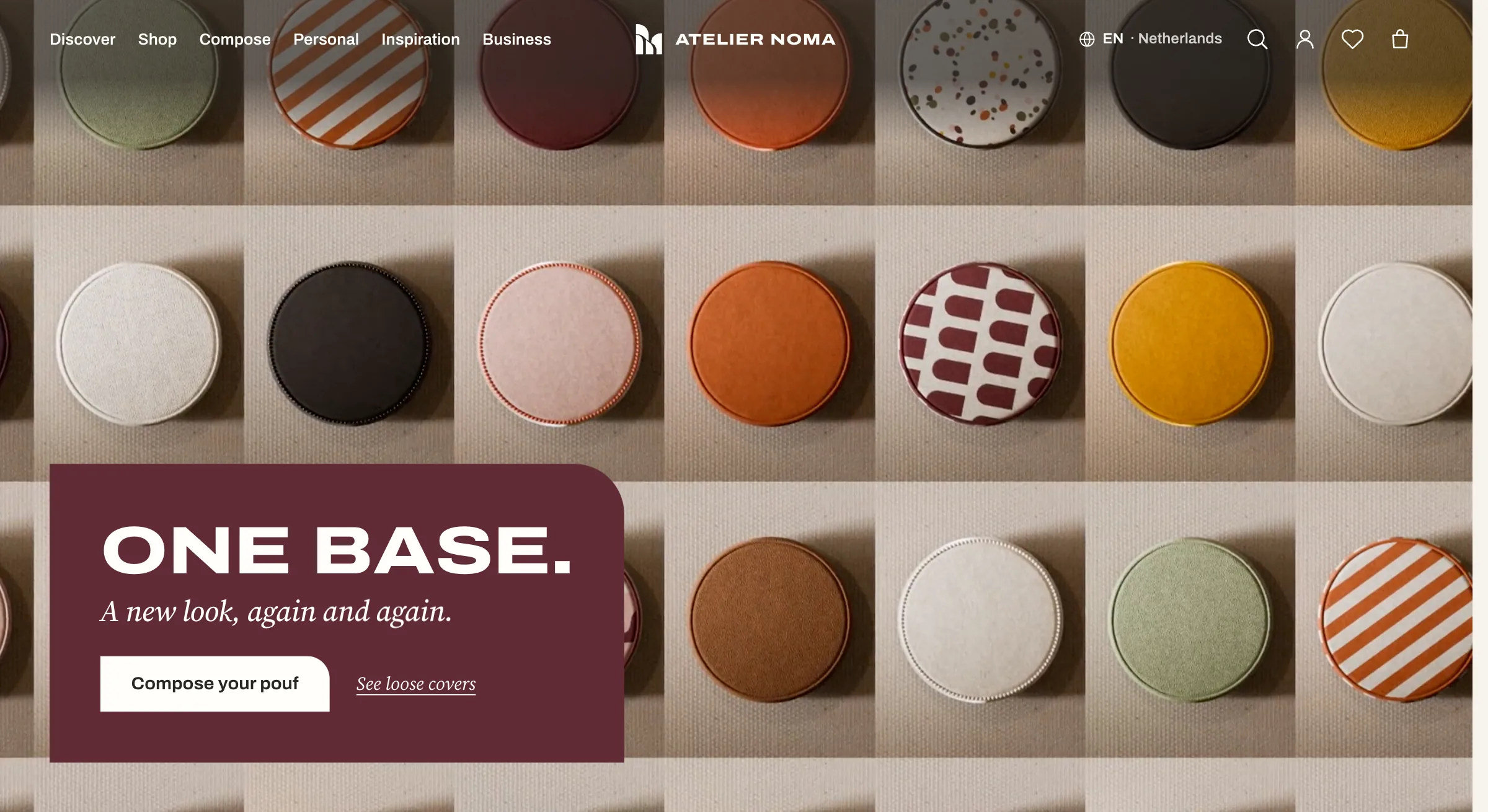
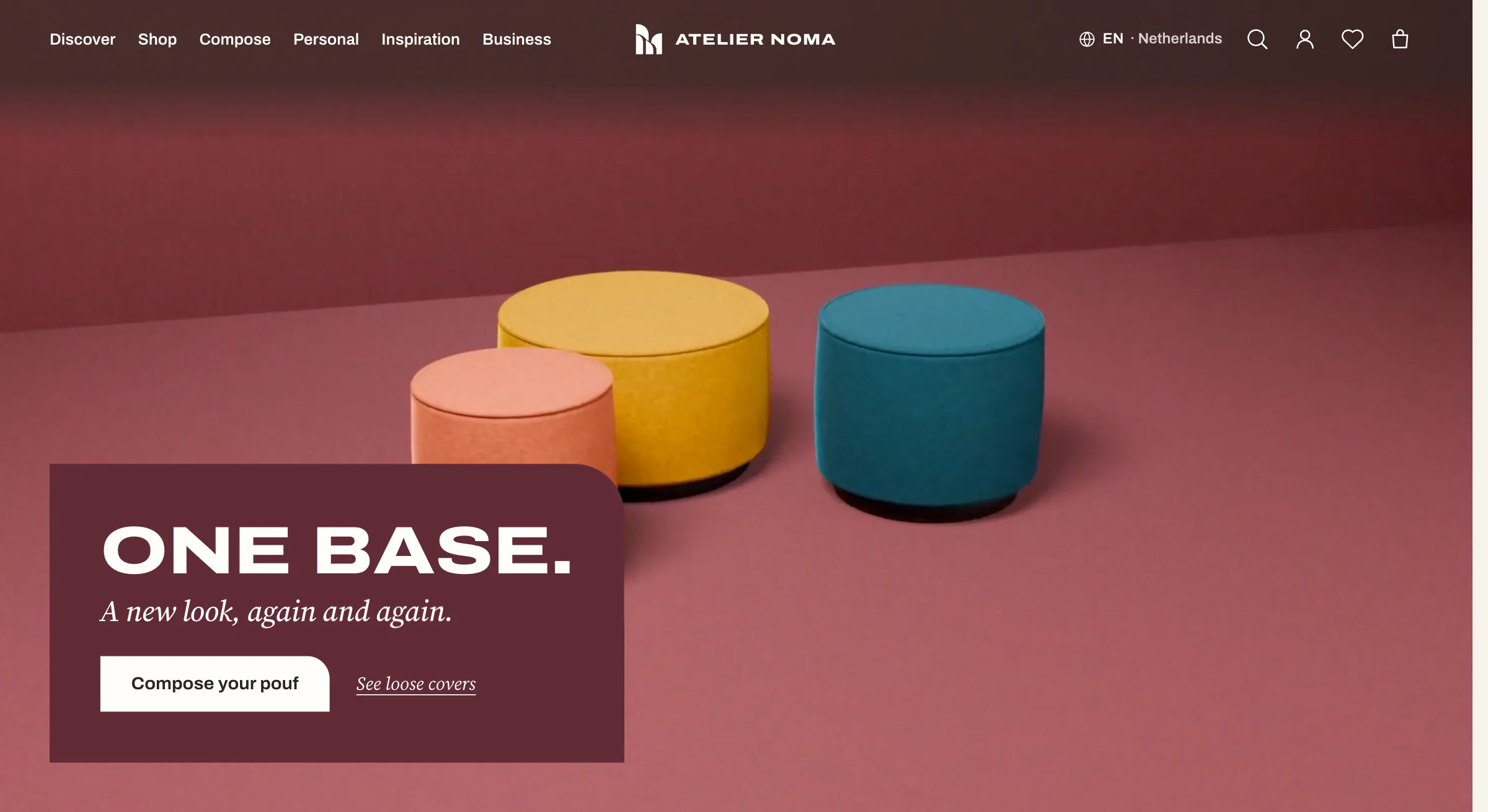
Atelier NOMA is a fictional pouf brand built around one idea: you buy a base once and give it a new look with a new cover. I built the whole shop and the admin behind it. The storefront is React 19, Vite and TypeScript, the back end Laravel 13 with Filament 5 and MySQL. It runs in five languages, takes Mollie payments in test mode, has discount codes and gift cards, a configurator that only shows covers that fit your base, accounts that log in with a code by email instead of a password, and a monogram picker with a live stitched close-up. Every product image and the looping video on the homepage are my own Blender renders. Without Laravel the shop runs fully in the browser on its own data, which is how the live demo works.
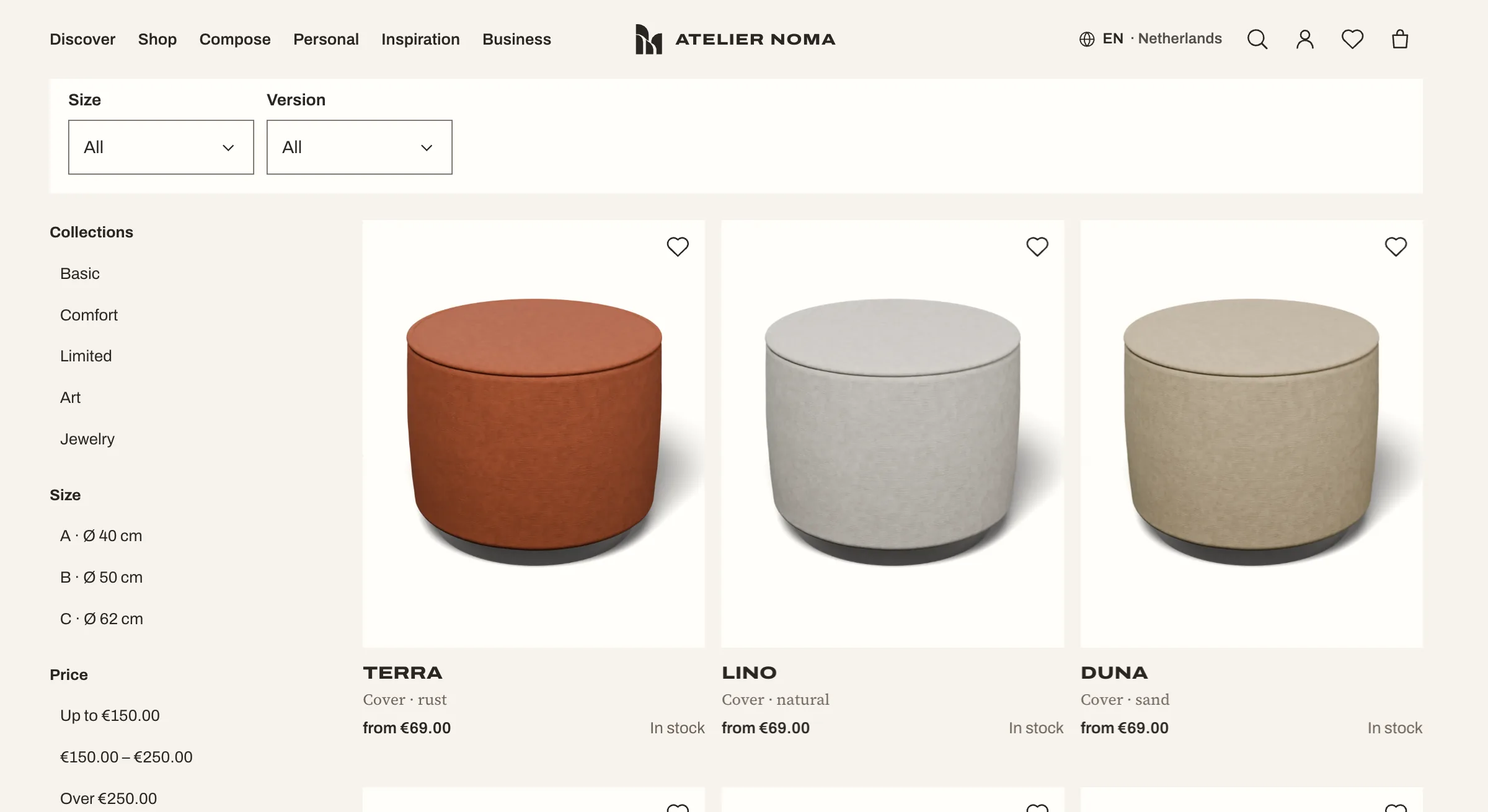
A shop is more than a product page and a pay button. This one had to sell bases, covers, complete poufs and parts that only make sense together, in five languages and with prices, stock, shipping and VAT per country. On top of that came discount codes, gift cards, business quotes and personal designs, accounts with privacy rules, and an admin where the owner changes everything without code. The hardest test: load a different brand with different products and the whole shop, from order to production, has to keep working without touching the code.
Everything the shop shows comes from data: products, pages, menus, texts, settings and even the URL words, so the same code runs any brand. The React storefront and Laravel share the same rules, and the server recalculates every cart before it takes an order, reserves the stock and hands the payment to Mollie. Filament 5 is the admin, with five roles, a dashboard, an audit log, imports, exports and backups, page drafts with versions and preview links, and a search that finds any order, product or text in all five languages, typos included. When Laravel is not there, the storefront falls back to running the whole shop in the browser on its seed data.
5 languages, 31 products, 5 admin roles and 465 sitemap addresses.
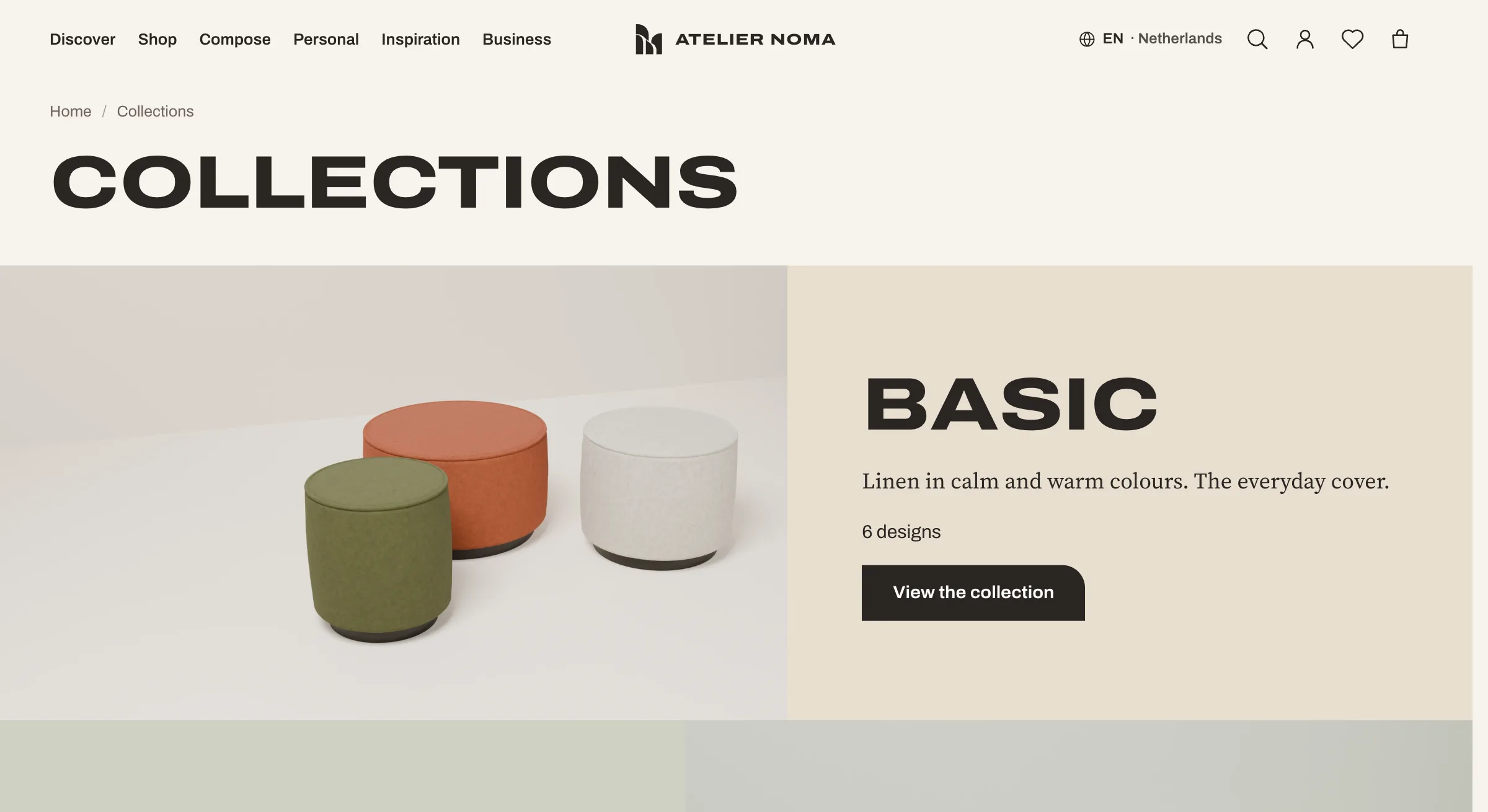
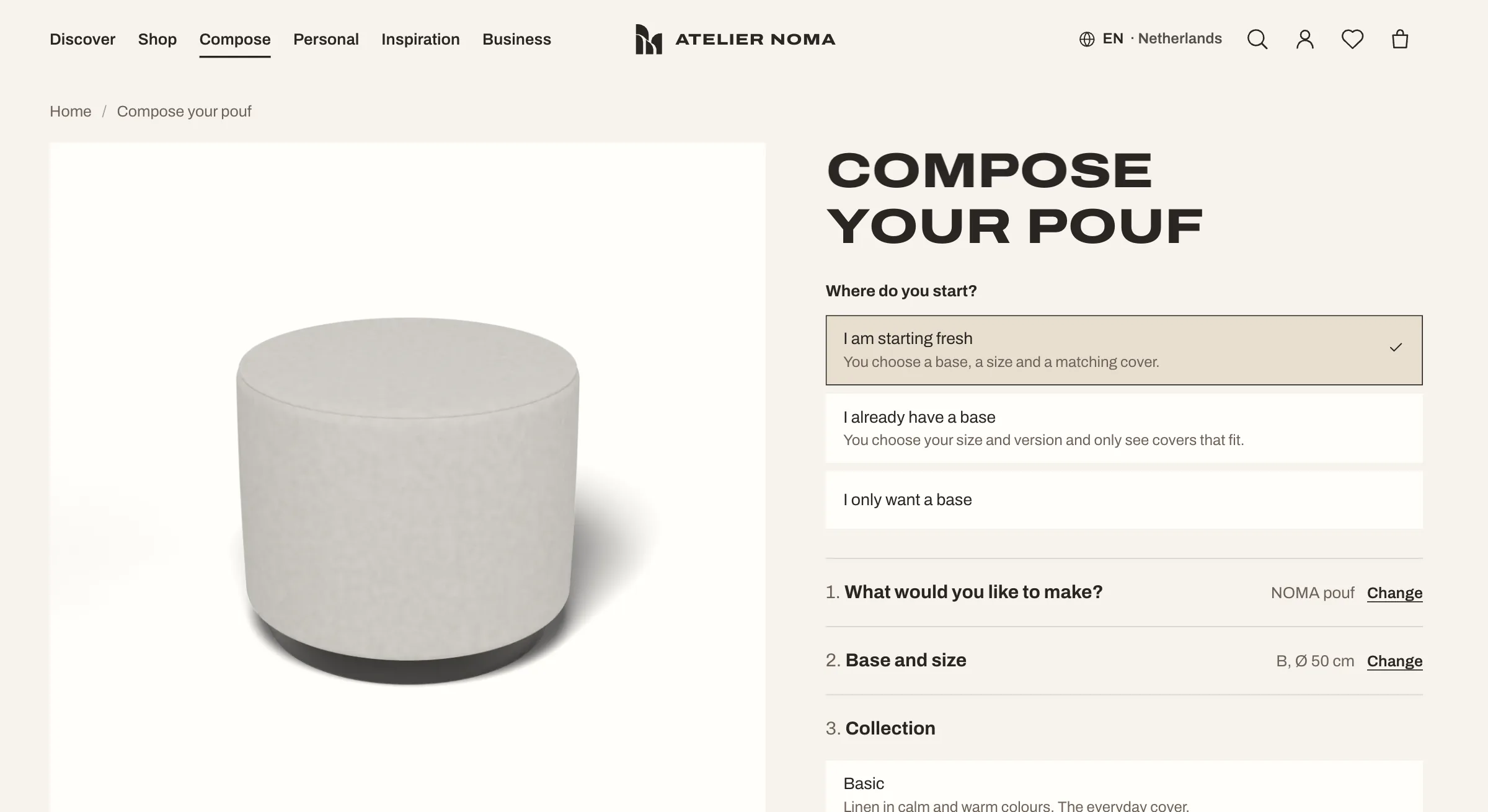
A configurator that starts from what you have: start fresh, pick a cover for the base you already own, or only buy a base. It only ever shows covers that fit.
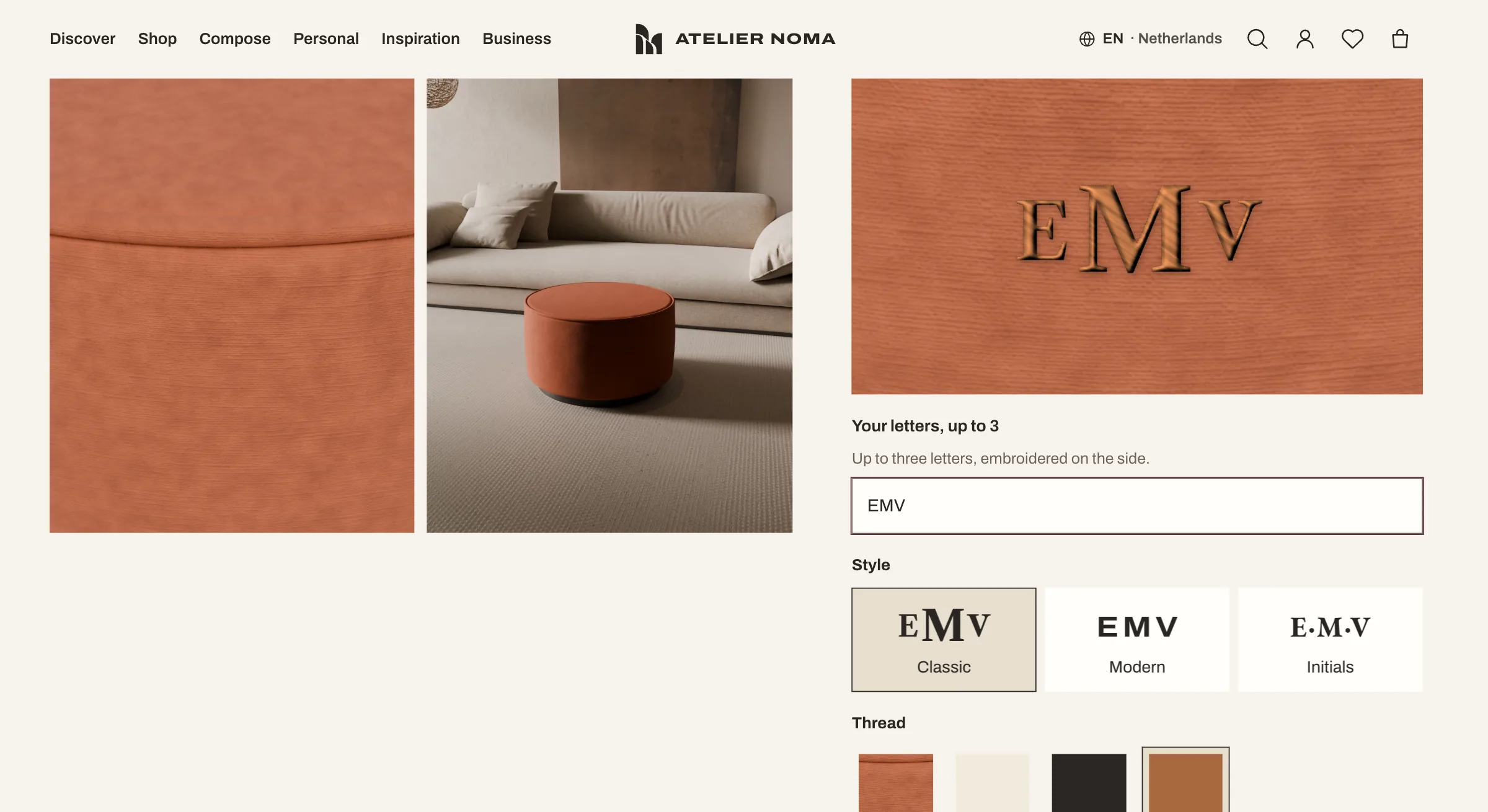
Up to three letters in three styles and four threads, drawn as satin stitch in SVG with the same light as the renders. A close-up on the cover updates as you type.
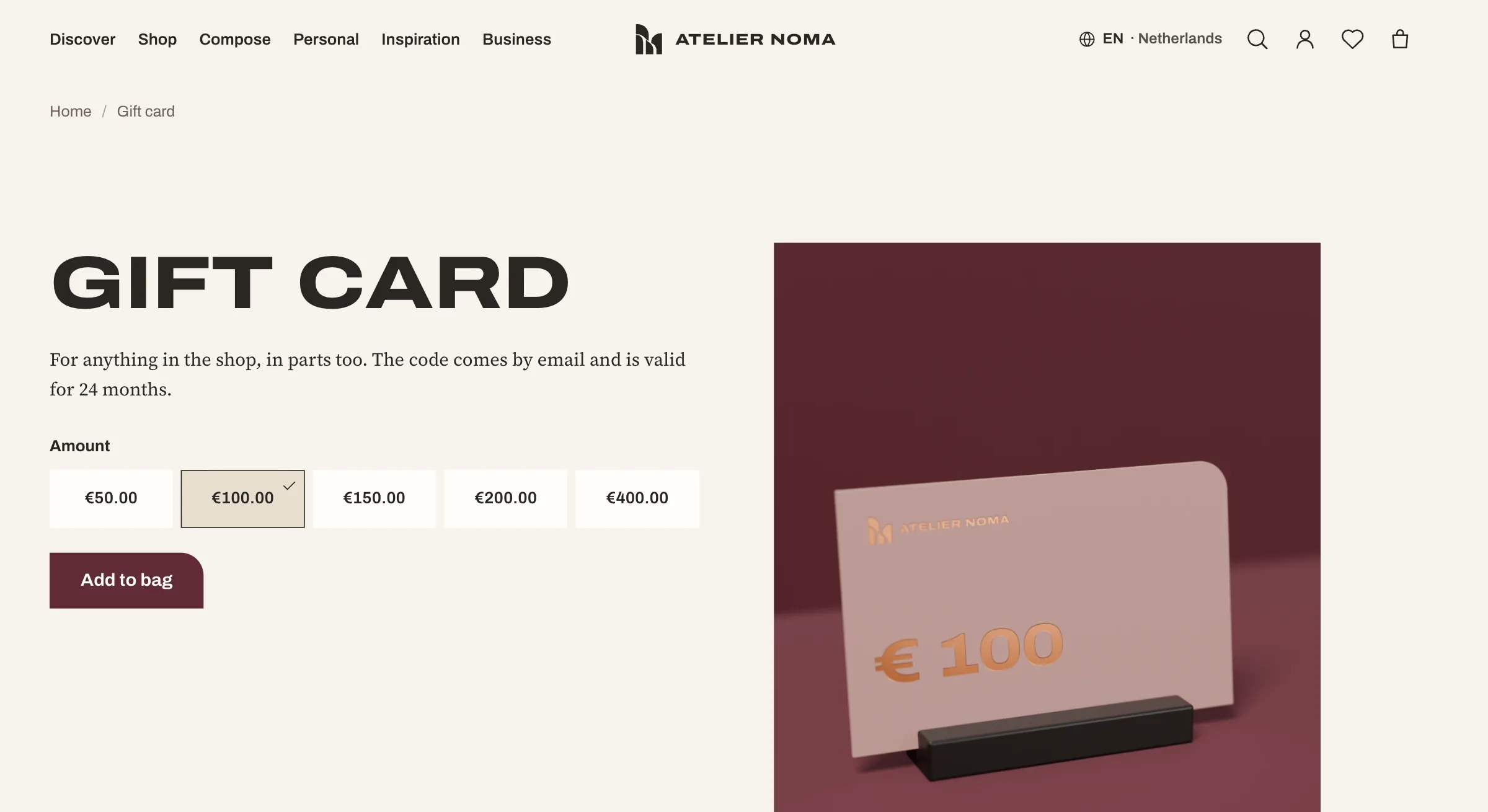
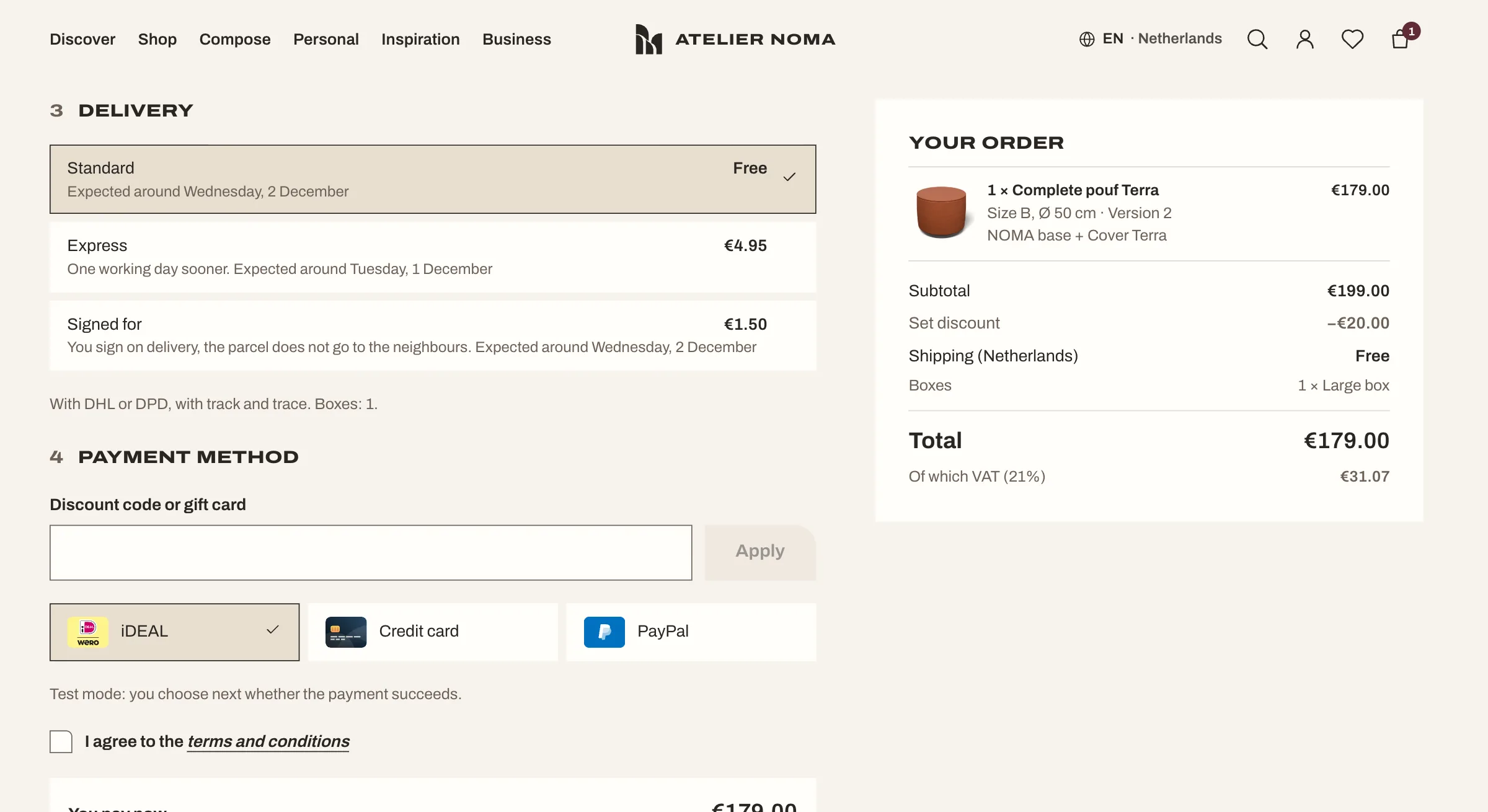
Codes by percentage or amount, with minimums, collections, dates and first-order rules. Gift cards from €50 to €400 can be spent in parts, and only their hash is stored.
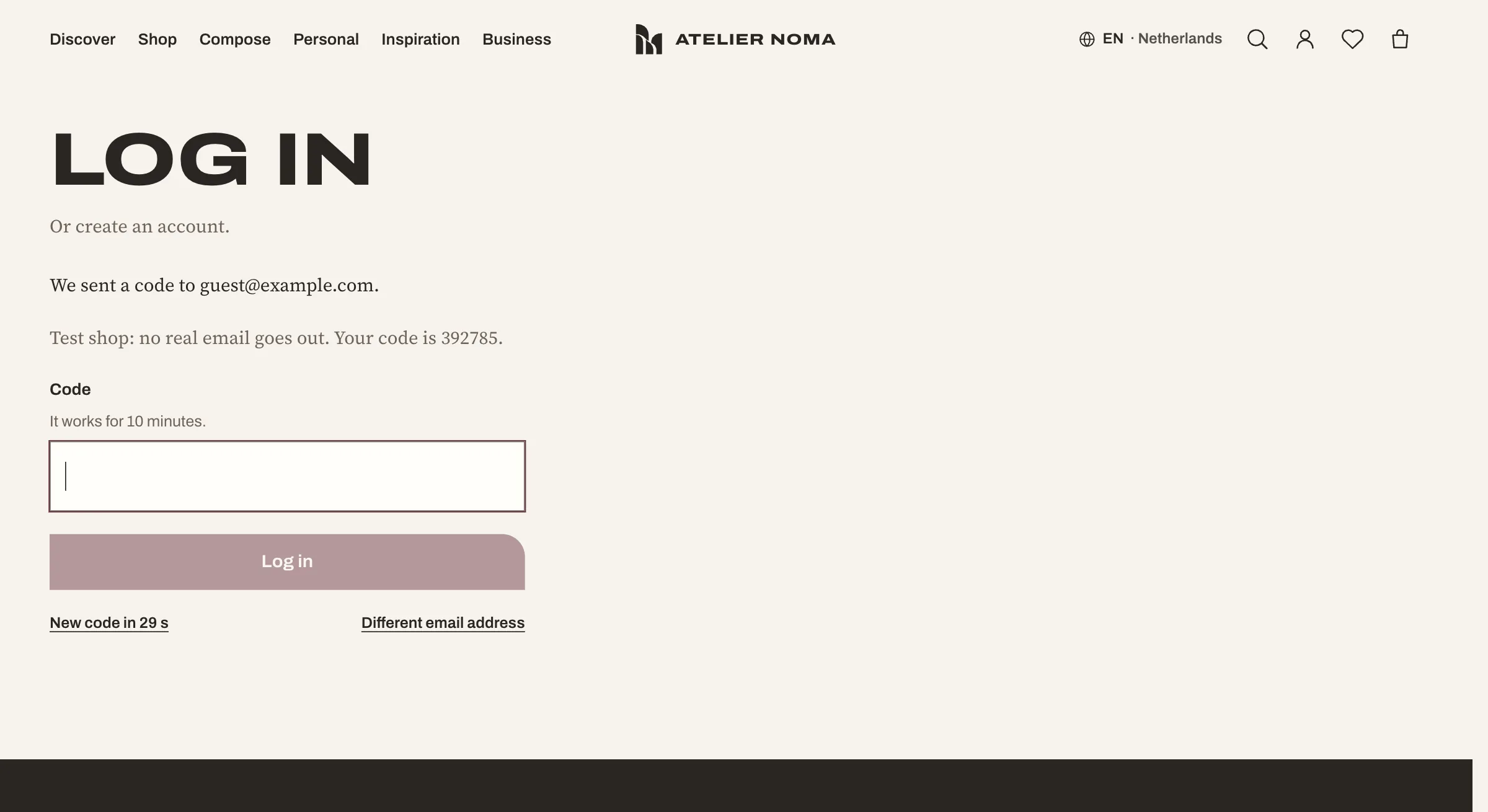
No passwords: an account is an email address and a six-digit code that works for ten minutes. Customers can download their data or delete their account themselves.
Products, pages, menus, texts in five languages, orders, quotes and settings, with five roles, two-step login, an audit log and backups the owner can restore.
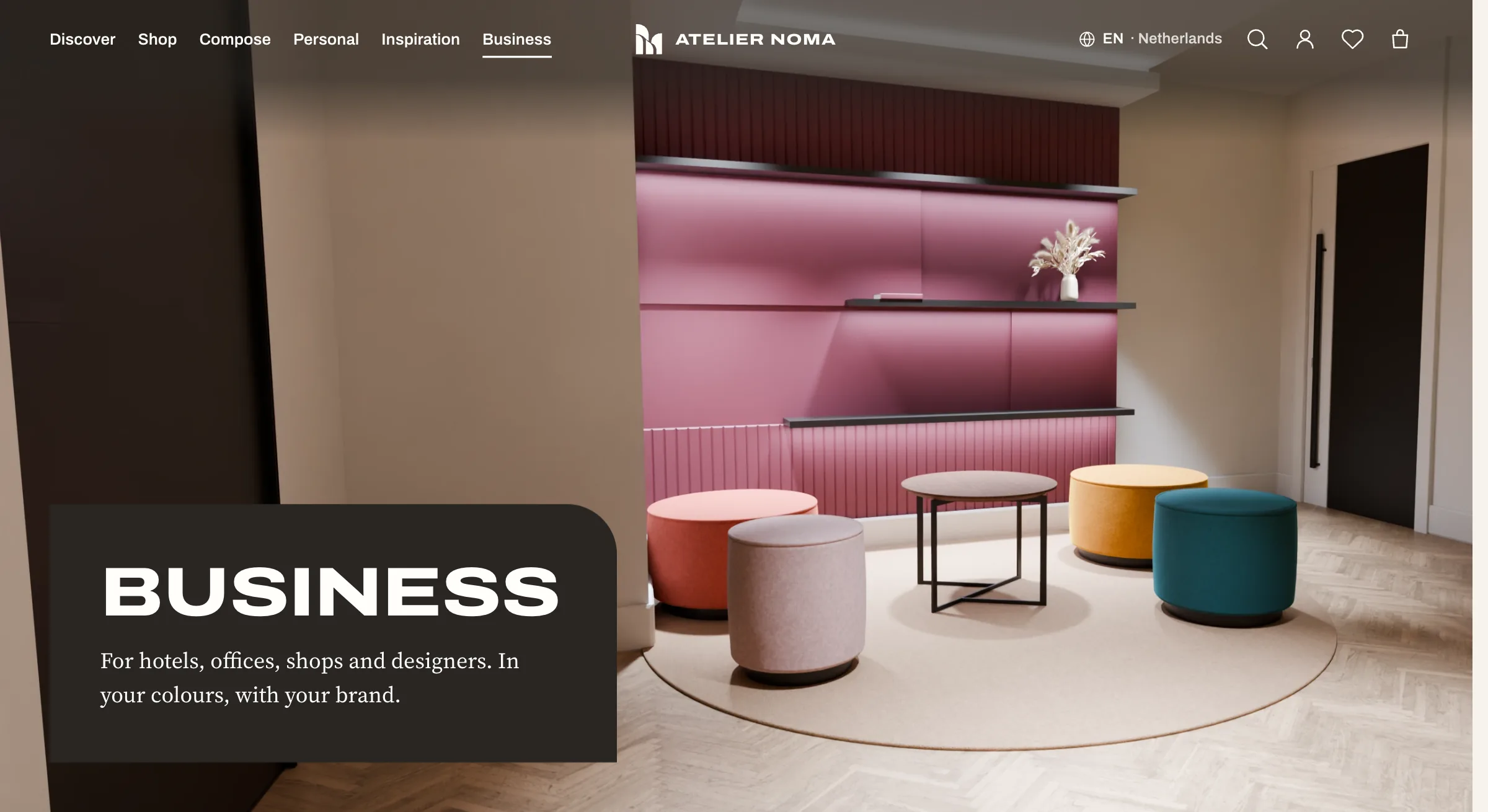
Every product shot, the living room scenes, the gift cards and a 20 second hero video that loops twelve shots with soft crossfades, all rendered from scripts.
Paper
#F7F3ED
Page background
White
#FFFDF9
Cards, fields and product images
Beige
#E8DED0
Selected options and quiet surfaces
Taupe
#6E6259
Secondary text
Copper
#9A5D3B
Accents and the copper thread
Ink
#292622
Text and the footer
Wine
#612B36
The brand colour, buttons and the hero card
Pink
#D8B6B0
Soft highlights
Archivo
Weight 400-800
Titles in caps at 125% width and weight 800, and all interface text
Source Serif 4
Weight 400
Body text and the italic subtitles
The storefront is React 19 with Vite and strict TypeScript, routed in five languages from one table of URL words that Laravel reads too. The back end is Laravel 13 on MySQL 8.4, with Filament 5 as the admin. The server recalculates every cart with the same rules as the storefront, reserves stock until a payment expires, and talks to Mollie for payments. Logins are a six-digit code and an httponly cookie, with the code and the session only stored hashed. Uploads for quotes and returns live on a private disk and open only through a signed link or in the admin. Retention runs every night. The renders come from Python scripts in Blender, and the hero video is cut from them with OpenCV, which also removes most of the handheld camera shake. The code is linted with oxlint and Pint, formatted with Prettier and Ruff, and checked with browser test scripts that run full orders, discounts, accounts and the admin against MySQL.
Most of a shop is rules: what a discount may touch, when stock is free again, what happens to a gift card when a payment fails. Writing them twice, in the browser and on the server, only worked because I checked both against the same carts until the amounts matched to the cent. Building everything from data made the code longer at first, but loading a second brand without changing a line showed it was worth it. And rendering the products myself taught me that a good image is mostly lighting and patience.